Feb 14, 2026
The Transcendental Bride: Elegance in the Light
The bride’s journey on the wedding day is a delicate balance between high-energy celebration and moments of profound, quiet introspection.
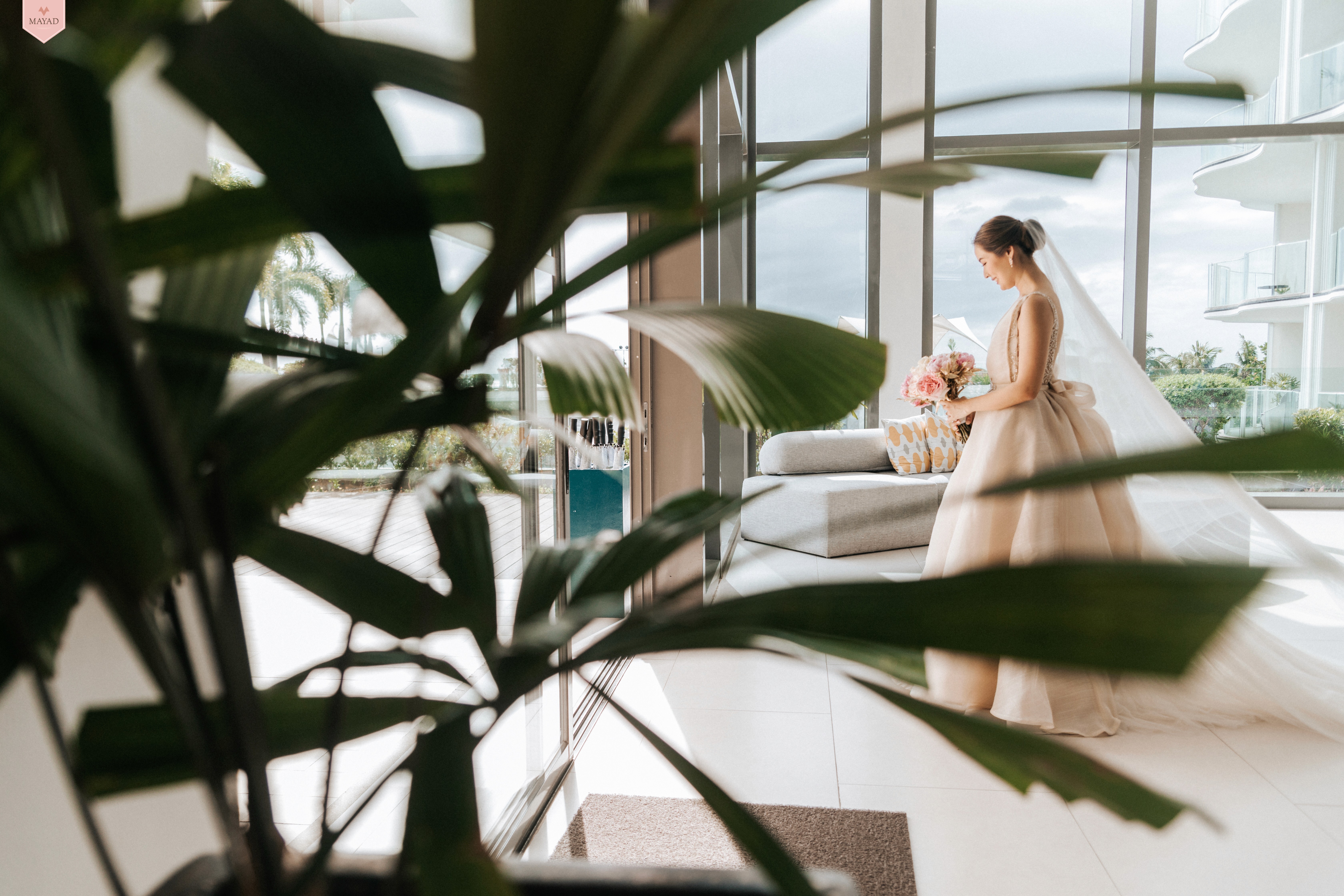
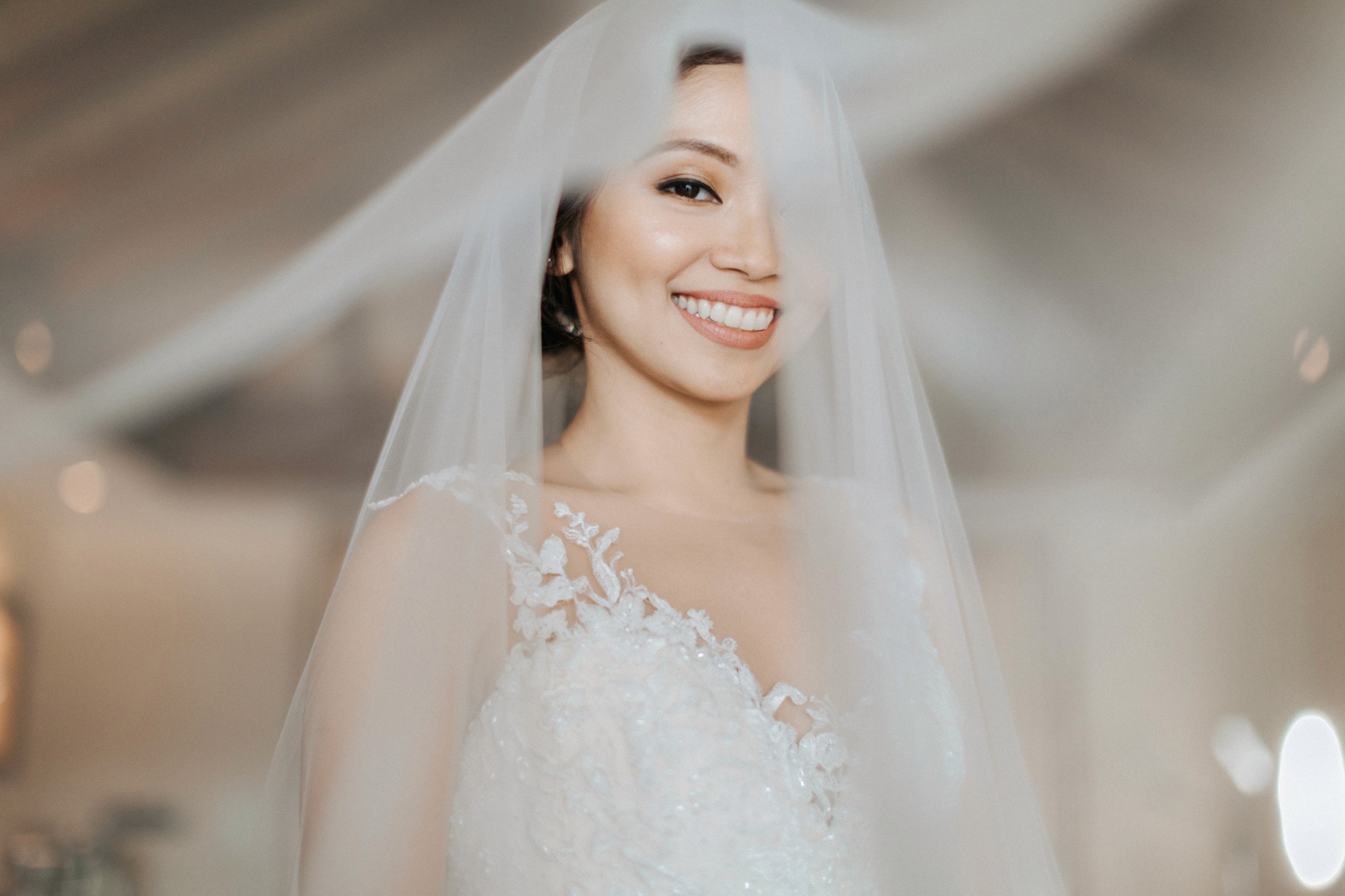
The bride’s journey on the wedding day is a delicate balance between high-energy celebration and moments of profound, quiet introspection. To capture this duality, the environment must be treated as a secondary character in her story. When a bride is positioned within a "Modern Heritage" setting, perhaps a rooftop with clean architectural lines or a vast coastal terrace. She is afforded a stage that feels both expansive and intimate. This architectural minimalism ensures that her silhouette and the movement of her gown are never lost against a cluttered background, allowing her natural grace to command the frame.
The true "secret ingredient" to a breathtaking bridal portrait is the atmospheric transition that occurs during the Golden Hour. As the sun descends, the light loses its midday harshness and takes on a "wrap-around" quality that acts as a natural beautifier. This specific lighting window is essential because it eliminates the flat, clinical look of digital photography and replaces it with a rich, amber-gold palette that feels deeply nostalgic. For the bride, this means her skin tones appear radiant and sun-kissed, and her white gown takes on a luminous, cream-like texture that reflects the warmth of the horizon.

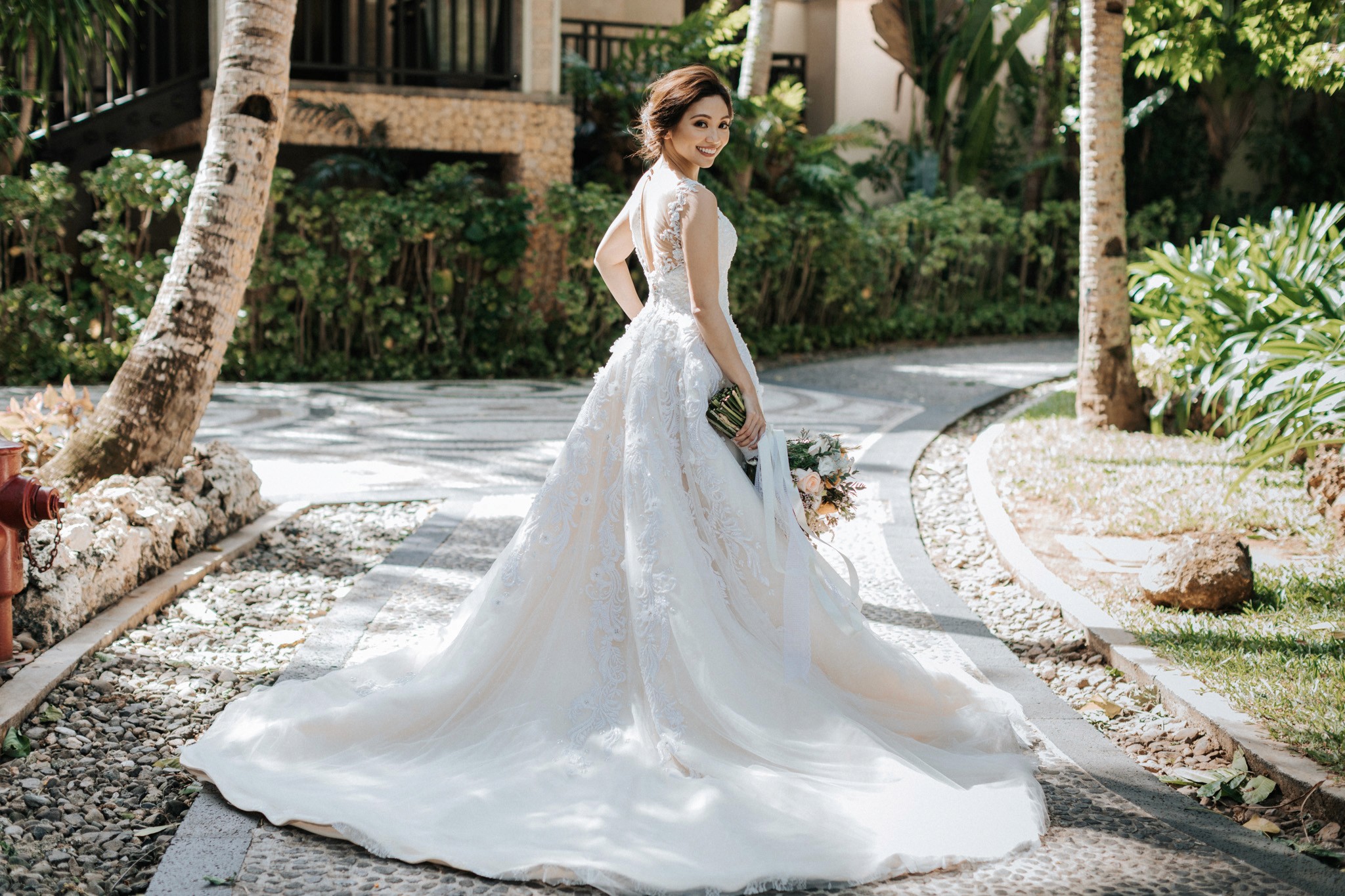
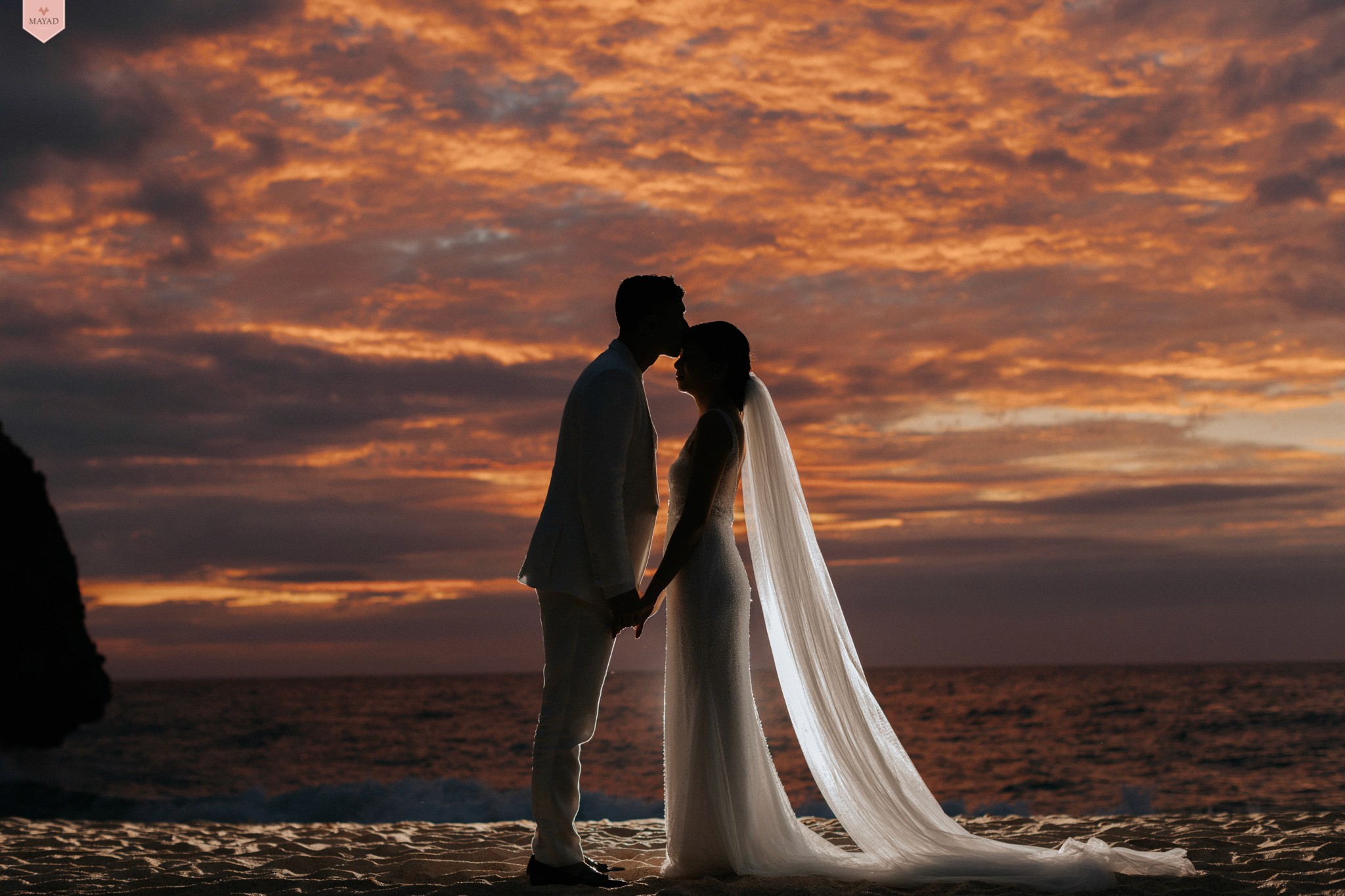
There is a specific power in the bridal silhouette that transcends standard portraiture. By underexposing the bride against a fiery orange or deep purple sky, the photographer strips away the distracting details of lace, jewelry, and makeup to focus entirely on her form and body language. This technique creates a "negative space" that invites the viewer to feel the emotion of the moment rather than just see it. Whether she is standing alone looking out toward the ocean or sharing a quiet toast, her dark silhouette against the massive watercolor canvas of the sky becomes a universal icon of peace and new beginnings.
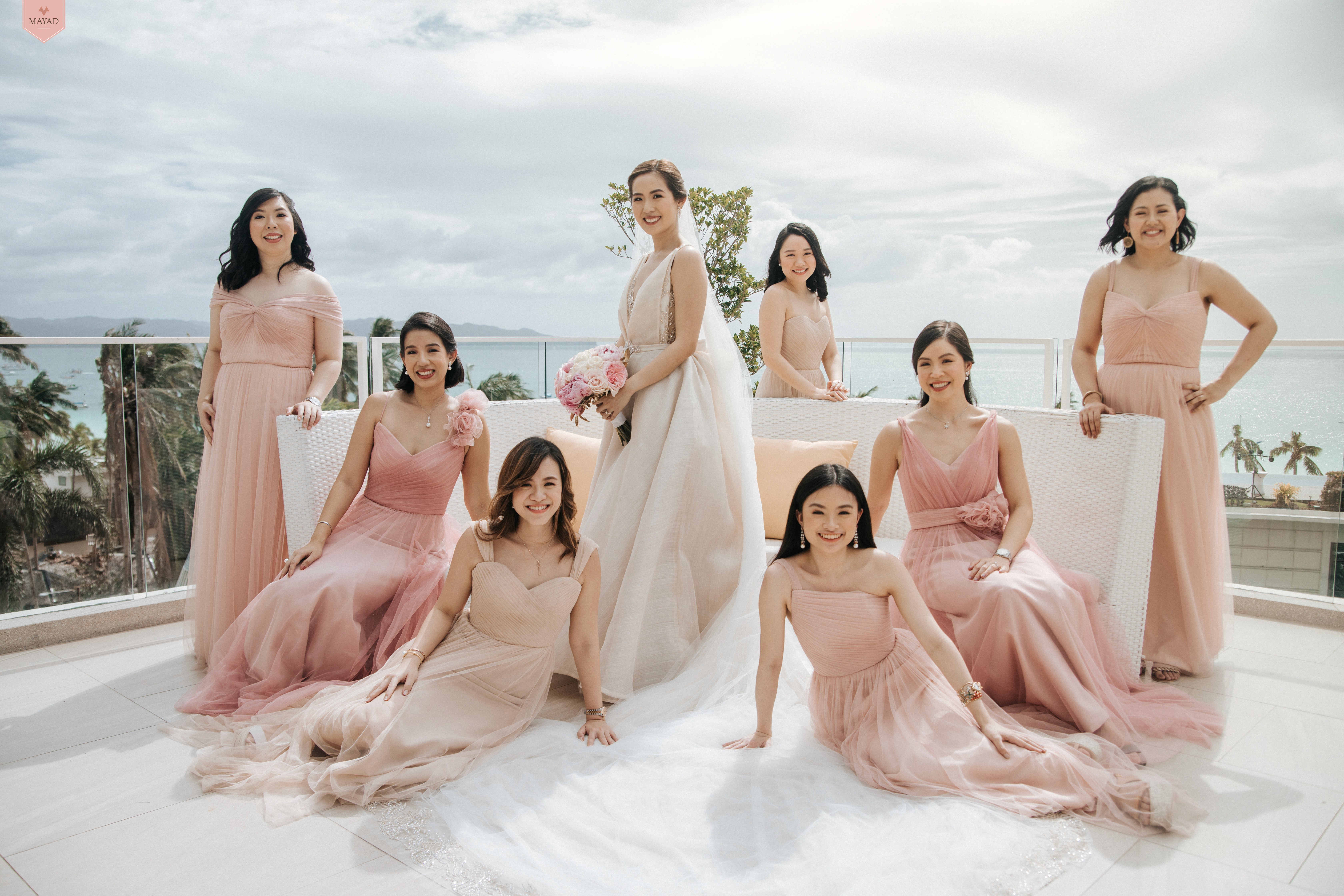
The "Sensory Anchor" serves as the bridge between the physical environment and the bride’s emotional state, directly influencing her visual radiance in final portraits. This concept operates on the principle that a bride’s appearance is most luminous when she is fully present and liberated from the logistical anxieties of the wedding day. By integrating "Tactile Warmth" into the design—utilizing materials like hand-loomed linens, weathered stone, or warm wood—the wedding environment provides a grounding physical reality that counters the ephemeral, high-stress nature of a large event.
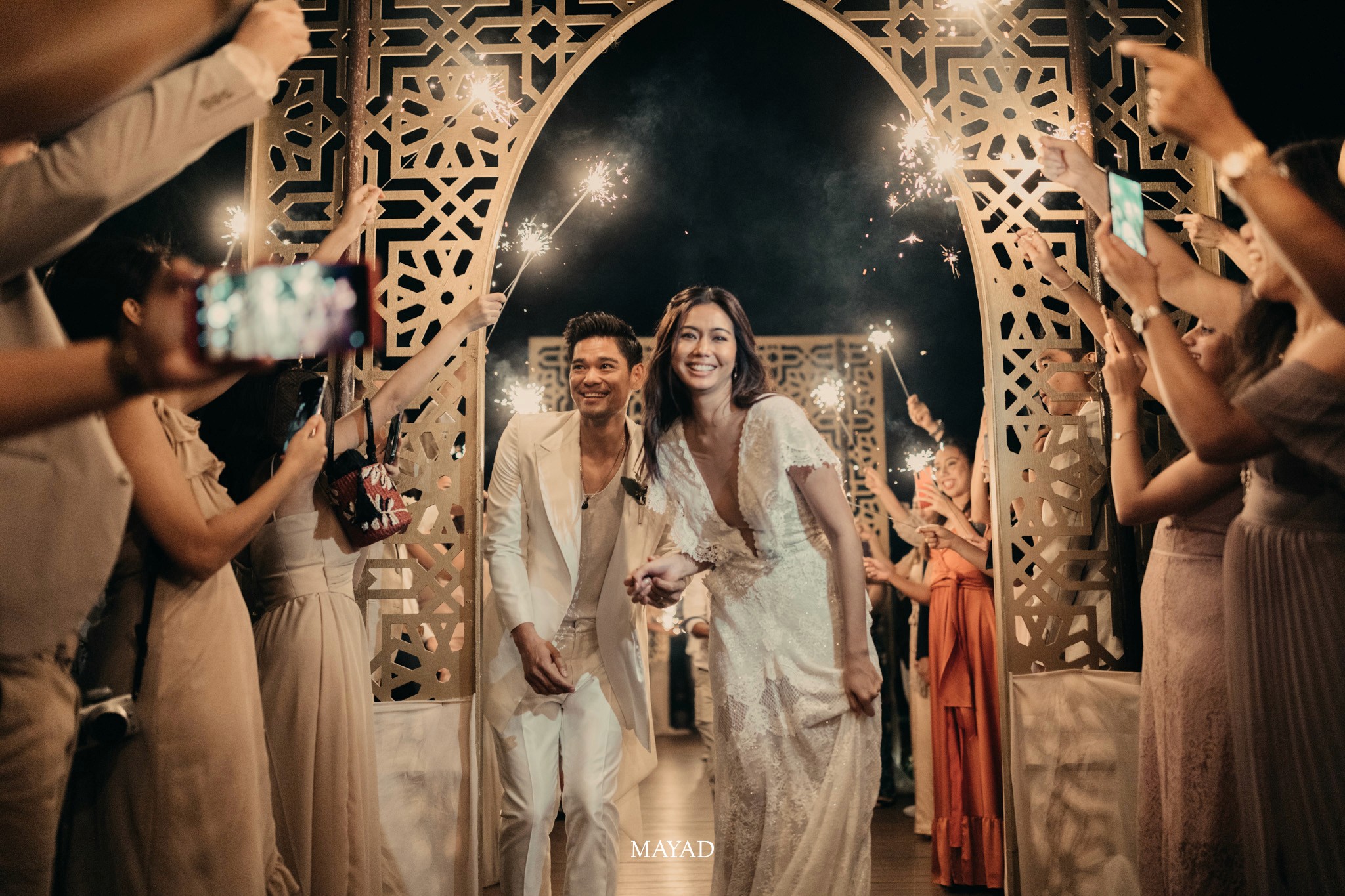
A bride’s radiance is deeply tied to her comfort and her ability to remain present. This is why the "Tactile Warmth" of the wedding design is so crucial. When a bride is surrounded by natural textures—linen, stone, or wood—and the cooling evening breeze of an open-air venue, her physical senses are anchored in the reality of the moment. A strategic timeline that prioritizes a "Sunset Session" allows her to step away from the noise of the reception and into a sensory haven. In this quiet space, the photographer can capture the "Golden" moments that feel less like a photoshoot and more like a private ritual, resulting in a gallery that feels authentic and high-end.
When a bride is placed in an open-air venue, the environment itself becomes a calming mechanism. The sensory input of a cooling evening breeze or the ambient sounds of nature acts as a "sensory anchor," keeping her mind focused on the current experience rather than the next item on the schedule. This physical comfort is a prerequisite for the relaxed body language and genuine expressions that characterize high-end photography.